About me
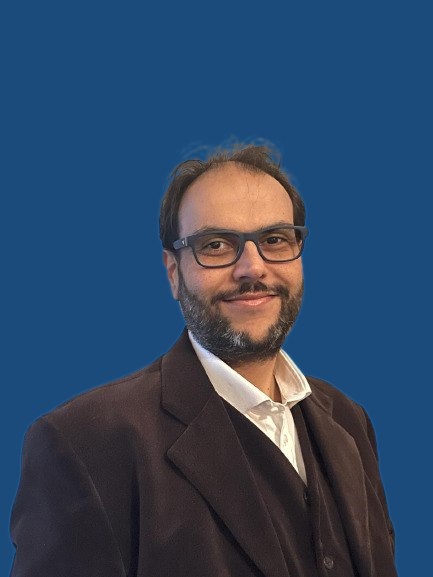
My name is Francesco Zinghinì. I am an electronic engineer and for twenty years I have designed, built and kept computer systems running. That experience is what led me to make myself available to parties in proceedings where the evidence is digital.
Education
I read Electronic Engineering at Sapienza University of Rome, graduating in 2006, specialising in Systems Theory. My thesis, «A monitoring system for safety in major civil works», dealt with the monitoring, reliability and safety of complex systems: the same habit of mind — understanding how a system behaves, where it can fail and what traces it leaves — that I apply today when reconstructing what happened inside an infrastructure.
I am registered with the Order of Engineers of the Province of Rome under number 31345. It is a public fact, verifiable on the Italian national register of engineers: registration carries a verified qualification, a continuing professional development requirement, a code of conduct and the disciplinary accountability that goes with it.
Professional path
I began as a developer on web platforms, moved on to running the infrastructure of a high-traffic portal while leading a team of systems engineers and developers, and then spent years as an independent consultant on Unix and Linux architectures, databases and system integration. Today my work covers system architecture and language-model based solutions in production.
What matters for forensic consultancy is the nature of that work: I have not analysed systems from the outside, I have administered them. I have read mail logs to find out why a message was not arriving, run database migrations and seen what happens to file metadata, handled security incidents when they were a problem to be solved rather than a chapter in a report. That is the capital I bring to an instruction.
Why forensic consultancy
Because I have too often watched a simple technical question become incomprehensible once it entered a case file. A well-prepared advocate faced with a log does not know what to ask it; a technician who does not understand procedure produces reports that are correct and unusable. There is a space between the two, and that is where I have chosen to work.
On one point I would rather be explicit, because in this field ambiguity about one's credentials is a professional defect: when I obtain specific forensic qualifications I will list them here, by name and date. What I offer today is what I have: documented technical competence, registration with a professional order, and the method set out in these pages.
How I work
- I say what can be established, first. Before the quotation and before the instruction, I say whether the technical route exists. Often it does not, and that is worth as much as a finding.
- I keep the levels apart. In my conclusions I separate what is established, what is a technical assessment and what remains unknown. I do not use the language of certainty to dress up an inference.
- I do not sign results that will not hold. If the analysis goes against the instructing party, I say so before filing.
- I write for the reader. Reports are read by judges, not by engineers. Technical jargon does not confer authority; it does damage.
Away from work
I run, play tennis and padel, and swim. I go to the mountains, to the theatre and to the cinema, and to sporting events when I can. None of this has the slightest bearing on a forensic report, but this is a page about me and it seemed honest to say so.
Do you have a matter under way?
Tell me what happened and what you need to prove. In a first reply I will tell you whether there is a technical route, what data is needed and how long it takes — before any commitment.